
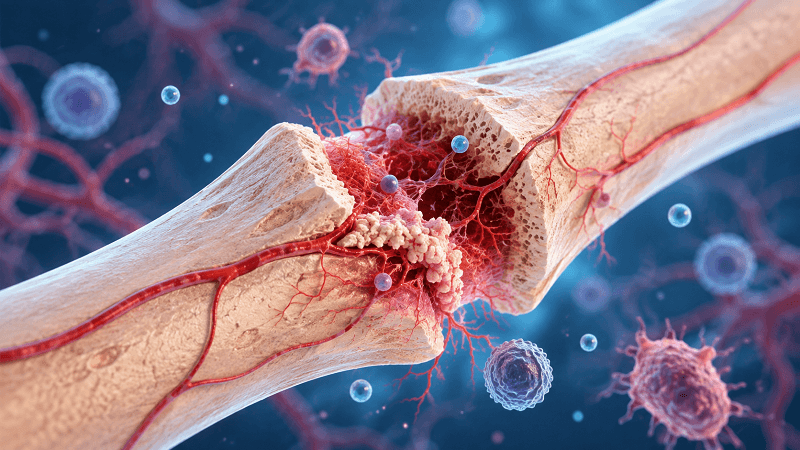
A broken bone might seem strangely inactive. Once the fracture happens and the bone is stabilized, there isn’t much to see from the outside. It can look like recovery is mostly about protecting the injured area, staying patient, and giving the body enough time to fix the damage.
Inside the body, the picture is far busier. Bone is living tissue, and a fracture sets off a coordinated repair process almost immediately. Blood vessels, cells, proteins, and minerals all have jobs to do as the body clears damaged tissue and starts creating the material needed to reconnect the break.
This constant activity helps explain why there is no simple answer to how long do bones take to heal. Recovery moves through several biological stages, and each one needs enough time to do its job properly.
The Repair Crew Arrives Fast
The body’s response begins within hours of the fracture. Broken blood vessels around the injury release blood, which collects near the damaged bone and forms a clot called a fracture hematoma. Rather than simply being leftover blood from the injury, this clot helps create the environment where the early stages of repair can begin.
Inflammation also kicks in quickly. Immune cells move into the injured area and begin clearing damaged cells and tissue while releasing chemical signals that help coordinate healing. Swelling, warmth, and tenderness can accompany this response, even though those symptoms may feel like additional problems.
Meanwhile, the surrounding muscles and soft tissues may also have sustained damage. The body isn’t repairing one isolated crack. It’s responding to an injured area and preparing it for the rebuilding work ahead.
A Temporary Bridge Holds Things Together
The early clot doesn’t remain the main support around the fracture. As healing progresses, specialized cells begin producing collagen and other tissue that forms a soft callus around the broken ends. This flexible material acts like an early bridge, providing some stability while more durable repair work develops.
Over time, that soft callus begins changing. New bone tissue gradually replaces the softer material, creating a hard callus that connects the fractured areas more securely. Minerals such as calcium and phosphorus contribute to making this developing bone stronger and more rigid.
The result isn’t a perfectly restored bone just yet. Think of it more as functional construction that reconnects the damaged structure. The body has closed the gap, but the newly formed bone still needs considerable refinement before the repair process is truly complete.
Feeling Better Isn’t the Finish Line
Pain can improve considerably before the bone has finished recovering. As inflammation settles and the fracture becomes more stable, everyday movements may start feeling easier. That improvement is encouraging, but it doesn’t necessarily mean the repaired area has returned to its original strength or structure.
Bone remodeling continues behind the scenes. During this stage, the body gradually removes excess or less efficiently arranged bone and replaces it with stronger, better organized tissue. The bone slowly adapts to the mechanical demands placed on it, reshaping the repaired area over an extended period.
This is one reason medical restrictions can continue after someone feels much better. Returning to normal activity too quickly can place stress on tissue that’s still maturing. Symptoms provide useful information, but they don’t always reveal exactly what’s happening inside the bone.
Every Fracture Has Its Own Clock
There isn’t one recovery schedule that fits every broken bone. A simple fracture in one location may progress differently from a complicated break somewhere else. The amount of displacement, damage to surrounding tissue, blood supply to the area, and treatment required can all influence the pace of repair.
Personal factors matter as well. Age, general health, nutrition, certain medical conditions, and smoking can affect the body’s ability to rebuild bone. Following medical instructions also matters, particularly when those instructions involve immobilization, weight-bearing restrictions, physical therapy, or gradual increases in activity.
Even two people with seemingly similar fractures may recover at different rates. That’s why general timelines are useful as reference points, not guarantees. Follow-up examinations and imaging can give medical professionals better information about how an individual fracture is actually progressing.
Conclusion
A broken bone is anything but inactive. Within hours, the body begins responding to bleeding and damaged tissue, then creates temporary support around the fracture. That early framework gradually becomes new bone, giving the injured area increasing stability as the repair moves forward.
Even then, the job isn’t finished. Remodeling can continue after pain and swelling have improved, strengthening and reorganizing the repaired bone over time. Recovery on the inside can therefore be considerably less obvious than the changes someone notices from day to day.
That makes patience an important part of fracture recovery. Timelines vary according to the injury, the person, and the treatment involved, so a calendar alone can’t determine when healing is complete. Medical professionals can evaluate progress and help determine when activities can safely resume.