
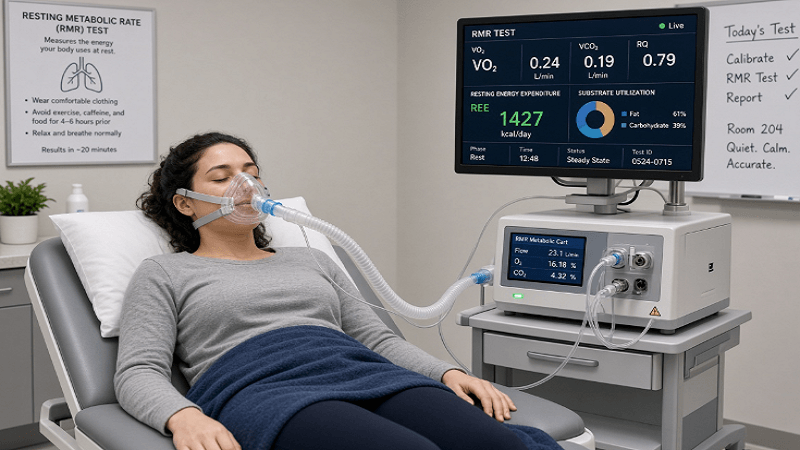
Knowing how much you weigh does not explain how your body uses energy. Even calorie calculators and fitness watches provide estimates rather than a direct measurement of your resting energy needs. That is why more people are looking for measurable information about metabolism, especially when planning weight management, nutrition, or fitness goals. Metabolic testing San Diego services can provide objective information about how your body uses energy by measuring physiological data rather than relying only on generalized formulas.
One of the most useful approaches is a resting metabolic rate test, which measures energy expenditure while the body is at rest. Indirect calorimetry can measure oxygen consumption and carbon dioxide production to estimate resting energy expenditure.
Understanding how metabolic testing works can help you determine what the results mean, who may benefit, how to prepare, and how metabolic information can complement other health and fitness assessments.
What Is Metabolic Testing?
Understanding How Your Body Uses Energy
Metabolic testing refers to assessments that measure or estimate how the body uses energy. The specific information collected depends on the type of test and the testing protocol.
For resting metabolic rate testing, the focus is on how much energy your body uses while at rest. Your body requires energy even when you are not exercising. Breathing, circulation, maintaining body temperature, supporting organs, and other basic physiological processes all require energy.
Indirect calorimetry is one method used to measure resting energy expenditure. It evaluates respiratory gases, particularly oxygen consumption and carbon dioxide production, to estimate energy expenditure.
This provides a measurement that is different from simply entering age, height, weight, and activity level into an online calculator.
Why Metabolic Rate Matters
Resting metabolic rate is an important part of total daily energy expenditure, but it is not the only component.
Your total energy expenditure also reflects physical activity and the energy required to process food. Therefore, an RMR result should be used as one piece of information when developing nutrition or fitness strategies.
Metabolism can also vary between individuals. Body size, body composition, age, sex, activity level, health status, and other factors can influence energy requirements.
The goal of testing is not to label a metabolism as simply “fast” or “slow.” It is to obtain useful physiological information that can be interpreted in context.
How Does a Metabolic Test Work?
Resting Metabolic Rate Testing
A resting metabolic rate test is designed to measure energy expenditure while you are resting.
The exact procedure can vary by facility, but a typical assessment involves:
- Following specific preparation instructions.
- Arriving in an appropriately rested state.
- Sitting or lying quietly before and during the measurement.
- Breathing normally into a metabolic measurement system.
- Measuring oxygen consumption and carbon dioxide production.
- Calculating energy expenditure from the collected respiratory data.
- Reviewing the results with the appropriate professional.
Indirect calorimetry uses respiratory gases to estimate energy expenditure. The methodology matters because food, caffeine, nicotine, recent physical activity, and other factors can influence measured resting metabolic rate. Research on best-practice protocols therefore emphasises controlled conditions before and during testing.
What Information Is Collected?
Several terms may appear in a metabolic testing report.
VO2 refers to oxygen consumption. It describes how much oxygen the body is using.
VCO2 refers to carbon dioxide production. Measuring carbon dioxide alongside oxygen can help calculate energy expenditure.
RMR means resting metabolic rate, the amount of energy the body uses while at rest.
Respiratory quotient, or RQ, represents the relationship between carbon dioxide production and oxygen consumption and can provide information about fuel utilisation under appropriate testing conditions.
These terms can sound technical, but their purpose is straightforward: they help turn breathing measurements into useful information about energy metabolism.
What Can Metabolic Testing in San Diego Reveal About Your Metabolism?
This is where metabolic testing becomes particularly useful. Instead of relying entirely on estimated calorie requirements, testing can provide objective information about resting energy expenditure.
Your Resting Energy Needs
An RMR test can estimate how many calories your body uses while at rest.
This information can help provide a more personalised starting point when considering nutrition or weight-management goals. It does not represent the exact number of calories you burn throughout an entire day because daily movement, exercise, digestion, and other activities also contribute to total energy expenditure.
The value is therefore not in treating the RMR number as a complete daily calorie prescription. It is in understanding one important component of your overall energy needs.
Nutrition Planning
Metabolic information can help provide context when developing nutrition strategies.
For example, someone working toward weight loss may benefit from understanding their measured resting energy expenditure alongside food intake, activity levels, body composition, and other health factors.
Similarly, people focused on maintaining weight or supporting muscle gain may find the information useful when evaluating their nutritional needs.
A measured result should be interpreted alongside the individual’s goals rather than used as a standalone diet plan.
Weight Management
Metabolism is often discussed as though it operates independently from body composition and lifestyle. In reality, energy expenditure is influenced by multiple factors.
Timely Health offers resting metabolic rate testing alongside physician-led weight management and other assessments, including DEXA and VO2 Max testing. Its current services describe RMR testing as a way to support nutrition and fitness planning.
This broader approach can help connect metabolic information with other measurements instead of treating one number as the entire picture.
Tracking Changes Over Time
A single metabolic test provides a measurement at a specific point in time.
Repeat testing may be useful when there is a clear reason to compare results, particularly when testing conditions and protocols are reasonably consistent. Changes can then be considered alongside changes in body composition, nutrition, physical activity, and weight-management progress.
The objective is not to chase a particular number. It is to understand whether the available data supports the strategy being used.
Who Can Benefit From Metabolic Testing?
Metabolic testing can be relevant to different people depending on their goals and the type of assessment being performed.
People Working on Weight Management
Individuals trying to lose, maintain, or gain weight may want more personalised information about energy expenditure.
An RMR measurement can provide additional context when combined with nutrition, activity, body composition, and medical information.
Recreationally Active Adults
People who exercise regularly may use metabolic testing to better understand their energy requirements.
This can be especially relevant when training volume changes, dietary goals change, or someone wants objective information rather than relying entirely on generic calorie estimates.
Fitness and Performance Enthusiasts
Athletes and structured-training enthusiasts may combine metabolic information with other assessments.
VO2 max testing, for example, focuses on cardiorespiratory fitness and exercise capacity, while RMR testing focuses on resting energy expenditure. Timely Health currently offers both assessments as separate services.
It is also important to distinguish fitness testing from medical evaluation. Metabolic measurements can provide useful physiological information, but they do not replace appropriate medical care when symptoms or health concerns are present.
Metabolic Testing vs. Other Health and Fitness Assessments
Different assessments answer different questions. Understanding those differences makes it easier to choose the information that is actually relevant to your goals.
Metabolic Testing vs. VO2 Max Testing
Metabolic testing, particularly resting metabolic rate testing, focuses on energy expenditure while the body is at rest.
VO2 max testing evaluates aerobic capacity during progressively harder exercise. It measures how effectively the body takes in and uses oxygen during demanding physical activity.
These tests are therefore complementary rather than interchangeable.
Metabolic Testing vs. Body Fat Testing
Metabolic testing focuses on energy expenditure.
Body fat testing focuses on body composition. It can help estimate the proportion or distribution of fat and lean tissue, depending on the method used.
This distinction matters because two people with similar body weight can have different body compositions and potentially different energy requirements.
Metabolic Testing vs. DEXA Scan
A DEXA scan can provide detailed information about body composition, including fat and lean mass, and certain DEXA examinations can assess bone density.
Metabolic testing answers a different question: how much energy the body is using under the conditions of the test.
Timely Health currently offers both DEXA scanning and resting metabolic rate testing, making them potentially complementary assessments for people interested in tracking different aspects of their health and fitness.
How to Prepare for a Metabolic Test
Preparation can affect the accuracy and consistency of resting metabolic rate measurements, so the testing facility’s instructions should always take priority.
Depending on the protocol, you may be asked to avoid eating for a specified period before testing. Caffeine, alcohol, nicotine, and recent exercise may also affect measurements.
Research-based protocols recommend controlled pre-test conditions because food, stimulants, and physical activity can influence resting metabolic rate.
You should also tell the testing professional about relevant medications, health concerns, recent illness, or changes in your usual routine.
The goal is to arrive in a sufficiently rested and controlled state so the measurement reflects resting metabolism rather than the temporary effects of recent activity or food intake.
How to Understand Your Metabolic Testing Results
Your RMR Is Individual
There is no universal resting metabolic rate that applies to everyone.
Results can be influenced by body size, body composition, age, sex, health status, and testing conditions. This is why an individual’s result should be interpreted in context rather than compared casually with someone else’s number.
Look at the Bigger Picture
An RMR result does not tell you exactly how many calories you burn each day.
Daily energy expenditure also includes physical activity, exercise, and the energy required to process food. Therefore, the result should be considered alongside lifestyle and other available measurements.
Body composition can also provide important context. Changes in muscle and fat mass may influence energy requirements over time.
Look at Trends When Appropriate
If repeat testing is performed using comparable conditions, changes in RMR can provide another data point for evaluating progress.
However, small differences should not automatically be interpreted as meaningful metabolic changes. Testing conditions and measurement variability need to be considered.
Professional interpretation can help determine whether a result is useful for the individual’s specific goals.
Why Objective Metabolic Testing Matters
It is easy to rely on statements such as “I have a slow metabolism” or “I burn calories quickly.” Without measurement, these descriptions may oversimplify a complex process.
Objective metabolic testing can replace some of that guesswork with measurable information.
A resting metabolic rate test can provide a baseline for energy expenditure. That baseline can then be considered alongside food intake, activity, body composition, exercise, weight trends, and other relevant information.
No single measurement tells the entire story of metabolism. The strongest approach is to use the available data together and interpret it according to the individual’s goals.
Frequently Asked Questions About Metabolic Testing in San Diego
What does a metabolic test measure?
A metabolic test can measure or estimate energy expenditure, depending on the specific test. A resting metabolic rate test measures energy use while the body is at rest, commonly using respiratory measurements.
What is a resting metabolic rate test?
A resting metabolic rate test measures how much energy your body uses while resting. Indirect calorimetry can estimate RMR by measuring oxygen consumption and carbon dioxide production.
How long does a resting metabolic rate test take?
The measurement itself can be relatively brief, but the full appointment varies by facility and protocol. Preparation and resting time before measurement may also be part of the process.
Is metabolic testing the same as a VO2 max test?
No. RMR testing focuses on resting energy expenditure, while VO2 max testing evaluates aerobic capacity during exercise. The two assessments provide different types of information.
Can metabolic testing help with weight management?
It can provide useful information about resting energy expenditure that may help inform nutrition and weight-management planning. However, RMR is only one component of total daily energy expenditure.
How often should metabolic testing be repeated?
There is no universal schedule. Repeat testing may make sense when there is a specific goal, such as evaluating changes over time, but the appropriate interval depends on the individual and testing purpose.
Is metabolic testing the only way to understand metabolism?
No. Metabolism is influenced by many factors, and no single test captures every aspect of energy metabolism. RMR testing can provide one objective measurement that can be combined with body composition, activity, nutrition, and other assessments.
Conclusion:
Metabolic testing provides an objective way to understand an important part of how the body uses energy. A resting metabolic rate test can provide information about energy expenditure at rest, helping create a more personalised starting point for nutrition, fitness, and weight-management planning.
The greatest value comes from combining metabolic information with other relevant measurements. Body composition, physical activity, exercise performance, nutrition, and health history can all add important context.
For people exploring metabolic testing San Diego, understanding what each assessment measures is the first step toward choosing useful data rather than relying entirely on generalized calorie formulas. A measured approach can help turn assumptions about metabolism into information that supports more informed decisions. To understand how body composition fits into this process.