
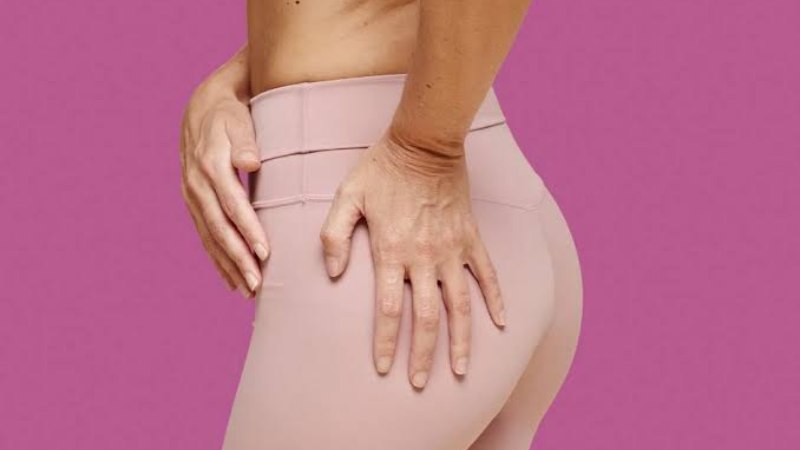
Of all the common aesthetic operations, this is the one where the surgeon’s technique matters most for your safety rather than your result.
Gluteal fat grafting carried a mortality rate high enough that the field formally investigated it. International task forces reviewed the deaths, identified the mechanism, and published technique recommendations that changed how the operation is performed. Surgeons who follow those recommendations work differently from surgeons who do not, and the difference is invisible on a website.
That is the useful frame for this decision. Not which clinic has the best photographs, but whether the person holding the cannula is doing the thing that the evidence says prevents the deaths.
This guide covers what the operation involves, the specific questions that separate a safe technique from an unsafe one, what proportion of transferred fat realistically survives, and what the recovery demands.
Two operations in one session
A Brazilian butt lift is not a lift in the surgical sense. There is no excision and no repositioning of tissue. It is liposuction followed by fat grafting, performed in the same sitting.
Fat is harvested by liposuction, usually from the abdomen, flanks, lower back or thighs. It is then processed to separate viable fat cells from blood, fluid and the tumescent solution used during harvesting. Finally it is injected into the buttocks in small quantities through multiple passes, which is what allows the grafted cells to establish a blood supply.
The contouring of the donor areas is part of the result, not a side effect. Narrowing the waist changes the proportion as much as adding volume does, and a good surgical plan treats both as one design.
Donor fat is the limiting factor. Very lean patients often do not have enough harvestable fat to achieve the volume they want, and no technique creates fat that is not there. This is the most common reason a realistic surgeon will propose a smaller change than the one requested, or decline the case altogether.
People researching bbl turkey should expect that assessment to happen before any figure or date is discussed.
The safety question, stated plainly
The serious risk is macroscopic fat embolism. If fat is injected into or beneath the gluteal muscle, it can enter a damaged gluteal vein, travel to the heart and lungs and cause a rapidly fatal embolism.
The mechanism is now well understood, and the professional response was specific. Task force guidance advises that fat be placed in the subcutaneous plane only, above the muscle, that cannulas be angled away from the deep tissue rather than downward, that larger diameter and more rigid cannulas be used because they are less likely to penetrate muscle inadvertently, and that injection occur while the cannula is in motion rather than static. Intramuscular and submuscular injection is what the guidance exists to prevent.
Ultrasound guidance has been adopted by a growing number of surgeons because it allows the cannula tip to be visualised in real time, confirming it remains above the muscle.
So ask directly, and accept only a direct answer. In which anatomical plane will the fat be placed? Do you use ultrasound guidance? What cannula diameter do you use for injection? How much fat do you plan to transfer, and how does that relate to the liposuction volume? Is this performed in a licensed hospital with anaesthetic and intensive care cover?
A surgeon who answers these fluently has thought about them. A surgeon who deflects toward photographs has answered a different question.
How much of the fat actually stays
Not all of it, and the honest range is wide. A meaningful proportion of transferred fat is reabsorbed in the months after surgery, because grafted cells only survive if they establish a blood supply quickly enough.
Several things influence survival. Gentle harvesting and careful processing matter. So does injecting in small amounts across many passes rather than depositing large boluses, since a large volume in one place leaves cells in the centre too far from a blood supply. Overfilling in pursuit of a dramatic result is counterproductive for exactly this reason.
Your own physiology plays a part too. Smoking impairs graft survival significantly. Weight loss after surgery reduces the grafted volume, because transferred fat cells behave like fat cells everywhere else and shrink when you do. Pressure on the area during healing reduces survival, which is why the sitting restriction exists.
Surgeons account for reabsorption by transferring more than the target volume, but there is a limit to how much tissue can be supported. Some patients need a second session to reach the result they wanted, and a surgeon who raises this possibility in advance is being accurate rather than pessimistic.
Ask what proportion of survival the surgeon plans for and when they assess the final volume.
Recovery, and the restriction people underestimate
The sitting restriction is the defining feature of this recovery. Direct pressure on the buttocks compresses the grafted fat and compromises its blood supply, so surgeons typically prohibit sitting directly on the area for a period measured in weeks. When sitting resumes, it is usually with a specialised cushion that transfers weight to the thighs.
Sleeping is on your front or side. Driving is off the table for a period. Desk work is genuinely difficult, and anyone whose job requires sitting should plan time off rather than assume they will manage.
The donor areas recover in parallel, with the swelling, bruising and compression garment requirements of any liposuction. Many people find the donor sites more uncomfortable than the grafted area.
For travel, the flight home is the pressure point in both senses. Prolonged sitting is exactly what the restriction prohibits, and long haul travel after a procedure of this length also carries thrombosis risk. Ask specifically when you will be cleared to fly, book a changeable ticket, take the cushion with you, and walk regularly during the flight.
The volume you see at two weeks is not the result. Swelling settles and reabsorption occurs over roughly three to six months, and that is when the outcome should be judged.
Candidacy, alternatives and choosing
Good candidates have sufficient donor fat, stable weight, no smoking history in the relevant window, no significant clotting disorder or cardiac condition, and an expectation calibrated to their own frame rather than to a photograph of someone else’s.
Alternatives exist and are worth knowing. Gluteal implants provide volume without requiring donor fat but carry their own complication profile, including displacement and infection. A true buttock lift, which excises skin, addresses sagging rather than volume and is a different operation for a different problem. Doing nothing is also a legitimate outcome of a good consultation.
When choosing, weight the following over everything else. Named surgeon with specialist certification in plastic, reconstructive and aesthetic surgery. Operation performed in a licensed hospital rather than an office suite. A clear, unhesitating answer on injection plane and ultrasound use. Annual case volume for this specific procedure. A written revision policy. And an honest conversation about how much volume your donor fat actually supports.
Anyone comparing bbl turkey providers will find that this list narrows a shortlist faster than price does, and narrows it in the direction that matters.
This article is for general information only and does not constitute medical advice. Suitability, technique, risks, recovery and results vary from person to person. Speak with a qualified plastic surgeon about your own circumstances before making any decision.