
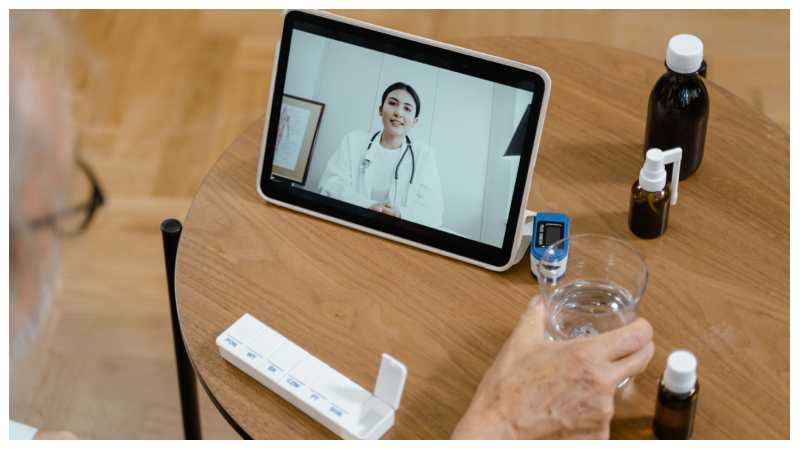
Video and phone consultations that once were used during the pandemic have become business as usual in many parts of Australian health care. None of this is of great significance to the bulk of general practitioners practising in mainstream health care. For practitioners outside of this mainstream, however, such as naturopaths, nutritionists, integrative doctors and acupuncturists providing a consultative service, as well as herbalists and functional medicine practitioners, this change is of significance.
Where the access gap actually sits
This ‘access problem’ is often framed in terms of metropolitan versus rural locations. However, when looking at the numbers, the situation is far more complex than that. It is true that patients in rural locations of less than 4,000 people often have no practitioner of any kind within a 2 hour drive. But that doesn’t tell the whole story.
Most alternative health practitioners practise in regions of high density, yet most practise at a very general level. This means that in cities of over 200,000 people there may be 200 or so registered naturopaths but only a handful with real depth on, say, children with digestive problems or perimenopausal women with hormone problems. Practitioners practising at this level are unlikely to have sufficient expertise to practise regionally.
Patient groups that benefit disproportionately
- People managing chronic fatigue or pain conditions, for whom travel consumes the energy a consultation is meant to address.
- Shift workers and FIFO employees whose rosters do not align with clinic hours.
- Carers and parents of young children, where a ninety minute round trip plus childcare makes an appointment functionally unaffordable.
- Patients seeking care for stigmatised concerns, including sexual health, mental health adjuncts, substance use and weight.
Privacy as a clinical variable, not a feature
But it is in a practitioner’s interest to know the discretion a patient will show. In small rural communities there is no reason that a practitioner wouldn’t recognise a car parked outside their clinic, let alone know that the patient sitting in front of them is in fact from the next town and has booked in under a partial name. Telehealth removes this type of information from a practitioner’s awareness.
Another point to consider when trialling online bookings is intake. Although patients online will give you more complete histories (i.e. A fuller accounting of their illnesses) at the first consult, there’s less room for error (and in fact, for unplanned discussion of ‘problem areas’). You need really good questionnaires (that include all the information you want to know) to counteract the loss of chance encounters at clinic, and actually require more considered setup of a structural process to gather all the relevant information prior to first consultation.
What privacy obligations still apply
As already stated, Telehealth does not alleviate the practitioner of their obligations under the Privacy Act and State health records legislation. Consultations should be conducted on platforms that are hosted within Australia or another country with suitable privacy protections. Recordings must be obtained with consent and disposed of within a set time frame. Practitioners must also be able to outline where notes are stored and who has access to them.
Continuity, and why remote models often do it better
While protocols for your alternative health care can be reviewed, altered and even reviewed again before they become fine-tuned and very valuable in the fourth consultation with a patient for example, for most patients travelling to see their practitioner for these types of reviews is not feasible.
In addition to long reviews and progress updates, even shorter appointments such as 15 minute fine-tuning of a patient’s treatment (such as dose changes) or tolerance issues can become practical to conduct when no time is lost travelling to and from a clinic to conduct such reviews. This facilitates early detection of any lack of response or even adverse effects. Patients who want this kind of ongoing oversight are generally best served by a dedicated telehealth alternative healthcare Australia provider that schedules reviews as a standing part of the treatment plan rather than on request.
Comparing consultation formats
| Format | Best suited to | Main limitation |
| In person | Initial assessment, hands-on modalities, physical examination | Geographic and scheduling constraints |
| Video consultation | Case taking, protocol review, results interpretation | No palpation, limited visual assessment quality |
| Phone consultation | Brief reviews, patients with poor connectivity | Loss of all visual information |
| Hybrid | Ongoing care where periodic physical review matters | Requires patient within travelling distance at intervals |
What separates a legitimate provider from a storefront
There is a low barrier to entry for provision of telehealth services. This means there is high risk of many services being provided by individuals who are not providing appropriate care and thus services need to be able to answer the following questions
- Named, identifiable practitioners with verifiable qualifications and association membership, displayed before booking rather than after payment.
- A real intake process covering history, medications, existing diagnoses and current practitioners, not a three question quiz.
- Clear scope statements about what the service does not treat and when a patient will be referred to a GP or specialist.
- Pathology ordering and interpretation through appropriate channels, with results explained rather than simply forwarded.
- Pricing published for both initial and review consultations, separate from any product sold.
- Documented escalation and emergency procedures, including what happens if a patient deteriorates between appointments.
The supplement dispensing question
Where the greatest proportion of a practitioner’s service revenue is derived from products as opposed to consultation a distorted clinical incentive is created and consumers/potential referrers are increasingly exposed to this. Note, Recording of reasons for specific products recommended to patients in consultation should occur for practitioner protection also.
Practical constraints worth planning around
A phone based model is not an alternative when connection to clients and internet is sporadic. All practitioners should clearly advise potential clients of the rebate offered by all Private Health Insurers for their modality, before booking a consultation. Cross-border practice in Australia is generally straightforward, but clients from overseas raise questions in relation to registration and insurance that need to be clearly addressed in advance of offering consultation to them as opposed to on a case by case basis.