
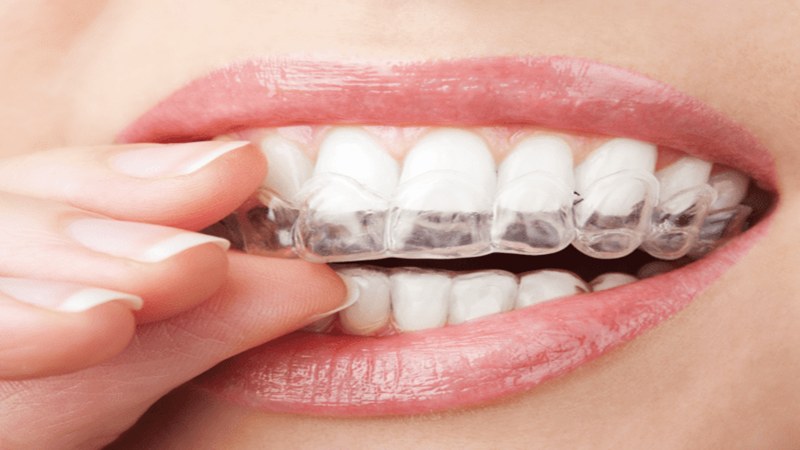
Choosing orthodontic treatment for a teenager involves more than picking an appliance. Parents are weighing cost, treatment length, how their teen will handle the responsibility of compliance, and what will actually produce the best outcome for their child’s specific bite. Invisalign Teen has become a popular option, but it is not automatically the right choice for every teenager. This article breaks down what parents need to understand before deciding.
What Makes Invisalign Teen Different from Adult Invisalign
Invisalign Teen is built on the same clear aligner technology as the adult version, but it includes features designed specifically for a growing mouth and a less predictable level of compliance. The aligners include built-in compliance indicators, small blue dots that fade with wear, giving parents and orthodontists an easy way to gauge whether the aligners are being worn as prescribed.
The system also accounts for the eruption of remaining permanent teeth, since many teenage patients still have some second molars or other teeth coming in during treatment. Additionally, Invisalign Teen provides a limited number of free replacement aligners if teenagers lose or damage them, making it a practical option since teenagers often misplace their belongings.
Is Invisalign Right for Every Teen?
Invisalign can produce excellent results for many teenage patients, particularly those with mild to moderate crowding, spacing issues, and certain bite corrections. However, aligner therapy is not the right option for every case, and the patient’s commitment to wearing the aligners as instructed is the biggest factor in achieving successful results.
Aligners need to be worn 20 to 22 hours per day to stay on schedule. For a motivated, responsible teenager, this is very achievable. A teen who is more likely to remove the aligners during school, sports, or social situations and forget to put them back in promptly, treatment can stall or extend well beyond the original timeline.
For more complex cases involving significant bite correction, severe crowding, or situations requiring precise control over tooth root position, self-ligating braces like Damon braces may be the more predictable choice. These fixed appliances work continuously regardless of teenage compliance, which removes one major variable from the equation.
An honest conversation with your orthodontist about your teen’s likely compliance, combined with a clinical evaluation of the bite, is the best way to determine which approach fits.
What to Expect During Treatment
Treatment typically begins with a thorough evaluation. The orthodontist takes digital scans or impressions to plan the entire course of tooth movement before making the first aligner.Teens then receive a series of clear aligners, each worn for one to two weeks before moving to the next in the sequence, gradually shifting the teeth into their planned final position.
Orthodontists typically schedule checkups every six to eight weeks, less frequently than the appointments required for fixed braces, since there is no wire to adjust.At each visit, the orthodontist checks progress against the treatment plan and addresses any tracking issues before they compound into a larger problem.
Treatment length varies depending on the complexity of the case, but mild to moderate cases often range from twelve to eighteen months, while more involved bite corrections can take longer.
Common Concerns Parents Have
One of the most frequent concerns is whether a teenager will actually wear the aligners consistently enough. The compliance indicators built into Invisalign Teen help with this, giving both parents and the orthodontic team a way to monitor adherence between appointments without relying purely on the teen’s self-reporting.
Another common question is what happens if an aligner is lost. Because teenagers are more likely to lose things than adult patients, Invisalign Teen includes replacement aligners as part of the program, which reduces the financial and scheduling disruption of a lost tray.
Parents also frequently ask about eating and oral hygiene. Because the aligners are removable, teens can eat whatever they want without restriction and brush and floss normally, which is an advantage over fixed braces that require navigating around brackets and wires. The tradeoff is that this same removability is what makes compliance the determining factor in success.
Cost Considerations
Invisalign Teen treatment cost is generally comparable to traditional braces, though the exact price depends on the complexity of the case and the length of treatment required. Many orthodontic practices offer financing plans that break the total cost into manageable monthly payments, making treatment more accessible regardless of the total investment.
Frequently Asked Questions
At what age can a teenager start Invisalign treatment?
Most teens become candidates for Invisalign once the majority of their permanent teeth have erupted, which is often somewhere between ages 12 and 14, though this varies by individual dental development. An orthodontic evaluation can determine the right timing for a specific teen.
How do I know if my teen will be responsible enough for Invisalign?
There is no perfect predictor, but considering your teen’s general responsibility with other commitments, combined with an honest conversation about the wear-time requirement, helps. The compliance indicators built into Invisalign Teen also give you a way to monitor adherence after treatment begins.
Can my teen play sports while wearing Invisalign?
Yes. Aligners can be removed during contact sports if needed, and many teens wear a separate mouthguard during athletic activities. Teens should put the aligners back in as soon as possible afterward to maintain the wear schedule.
What happens if my teen does not wear the aligners enough?
Inconsistent wear slows tooth movement and can extend the overall treatment timeline. In more significant cases of non-compliance, the orthodontist may need to take new scans and create updated aligners to get the treatment back on track, which can add both time and cost.
Is Invisalign more expensive than traditional braces for teens?
Cost is generally comparable between Invisalign and traditional braces, though it varies by case complexity and the specific practice. Financing plans are commonly available to help spread the cost over the course of treatment.
If you are trying to decide whether Invisalign or fixed braces are the right option for your teenager, schedule a thorough orthodontic evaluation. An orthodontist can examine your teenager’s teeth, discuss the available treatment options, and recommend the most suitable choice.Burke & Redford Orthodontists in Temecula and Lake Elsinore, California, offers free consultations where pediatric orthodontist Dr. Ryan Redford can assess your teen’s specific case and discuss which treatment option is likely to produce the best outcome.