
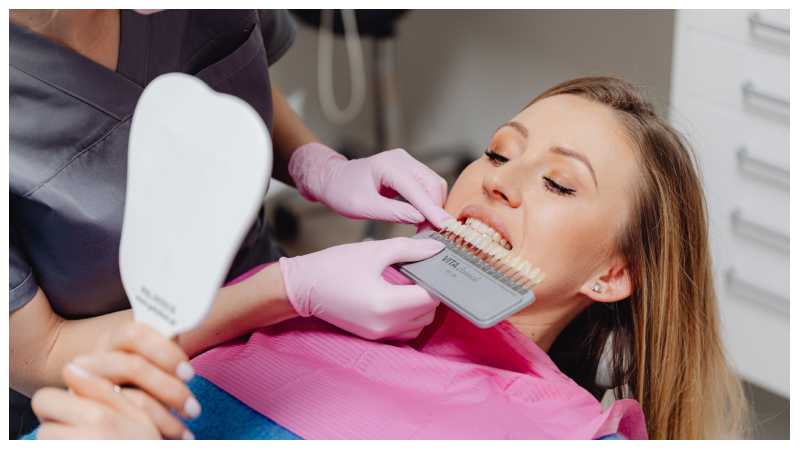
What Are Porcelain Veneers?
Porcelain veneers are thin, custom-made shells of dental ceramic bonded to the front surface of your teeth. Usually about 0.3 to 0.7 mm thick, they cover chips, stains, gaps and uneven shapes to create a brighter, more balanced smile.
Unlike crowns, which cap the whole tooth, veneers cover only the visible surface. That means less tooth structure is removed, and the result can look remarkably natural. High-quality porcelain reflects light much like real enamel, which is why porcelain veneers remain one of the most popular choices in cosmetic dentistry.
Key Benefits of Porcelain Veneers
- Natural appearance. Porcelain is translucent, so it catches and reflects light in a way similar to healthy enamel.
- Stain resistance. Glazed porcelain resists staining from coffee, tea, red wine and tobacco better than natural teeth or composite resin.
- With good care, porcelain veneers commonly last 10 to 15 years, and often longer.
- One treatment can address discoloration, chips, small gaps, worn edges and mildly uneven teeth.
- Gum compatibility. Porcelain is smooth and biocompatible, so gum tissue generally tolerates it well.
Veneers also have limits. The treatment is usually irreversible, porcelain cannot be whitened later, and a cracked veneer typically has to be replaced rather than repaired.
Who Is a Good Candidate for Porcelain Veneers?
Porcelain veneers work best for adults with healthy teeth and gums who want to improve the look of their smile. You may be a good candidate if you have:
- Deep stains that whitening cannot remove
- Chipped, cracked or worn front teeth
- Small gaps between teeth
- Teeth that are slightly misshapen, too short or uneven
- Mild crowding that you prefer not to treat with orthodontics
Veneers may not be the right first step if you have active decay, gum disease, very little enamel, or a heavy teeth-grinding habit (bruxism). In those cases, your dentist will usually treat the underlying issue first or suggest an alternative such as bonding, aligners or crowns.
The Porcelain Veneers Procedure, Step by Step
Getting porcelain veneers usually takes two to three visits over two to four weeks.
- Consultation and smile design. Your dentist examines your teeth, takes photos, X-rays and digital scans, and talks through the shape, length and shade you want. Many practices now show a digital preview or a temporary “test drive” of the new smile.
- Tooth preparation. A very thin layer of enamel is gently reshaped so the veneer sits flush. Conservative, minimal-prep techniques remove as little natural tooth as possible.
- Impressions and temporaries. Precise scans or impressions go to a dental ceramist. You may wear temporary veneers while your final set is crafted.
- Bonding. At the final visit, each veneer is checked for fit and color, then bonded with a strong dental adhesive and hardened with a curing light.
- Final polish and bite check. Your dentist refines the edges and confirms your bite feels natural.
How much tooth is removed in step 2 is one of the biggest variables between approaches to porcelain veneers. Biomimetic dentistry, the philosophy practised at Lazare Biomimetic Dentistry and Smile Design on the Upper East Side of NYC, treats a veneer as part of a living tooth rather than a cover over it. Preparation stays within enamel wherever possible, because porcelain veneers bonded to enamel tend to hold more reliably than those bonded to the softer dentin beneath. It is a reasonable question for any patient to ask how much enamel will be removed, and why.
Porcelain Veneers vs Composite Veneers
Porcelain usually lasts longer and looks more lifelike, while composite resin is quicker to place and easier to repair but needs more upkeep.
| Feature | Porcelain veneers | Composite veneers |
| Typical lifespan | 10–15+ years | 5–7 years |
| Appearance | Highly natural, light-reflective | Good, but can dull over time |
| Stain resistance | Excellent | Moderate |
| Visits needed | 2–3 | Often 1 |
| Tooth preparation | Minimal enamel reshaping | Often little or none |
| If damaged | Usually replaced | Often repaired chairside |
How to Care for Porcelain Veneers
Porcelain veneers need the same daily care as natural teeth, plus a few habits that protect the bond and the edges.
- Brush twice a day with a soft-bristled brush and a non-abrasive toothpaste.
- Floss daily to keep the gum line and veneer edges clean.
- Wear a night guard if you clench or grind your teeth.
- Avoid biting ice, pens, fingernails or opening packages with your teeth.
- Use a sports mouthguard during contact sports.
- See your dentist for checkups and professional cleanings every six months.
Key Points to Remember About Porcelain Veneers
Porcelain veneers are a durable, natural-looking option for correcting stains, chips, small gaps and uneven teeth. Results depend largely on careful planning, accurate shade matching and how much healthy tooth structure is preserved during preparation.
Because the treatment is generally irreversible, it helps to understand the alternatives, such as whitening, bonding or orthodontics, and to discuss expected lifespan and maintenance with a dentist before deciding.
This article is for general information only and is not a substitute for advice from a licensed dentist.