
Why Austin’s Dental Patterns Make Wisdom Teeth Consultations More Common
Third molars typically arrive between ages 17 and 25, often with little warning beyond a dull ache in the back of the jaw. Austin’s dental practices report a steady stream of young adults arriving at this stage, many of them newly settled in the city for work or graduate school and establishing care for the first time. The timing is rarely convenient, since symptoms tend to surface right as people are juggling new jobs, coursework, or relocation logistics.
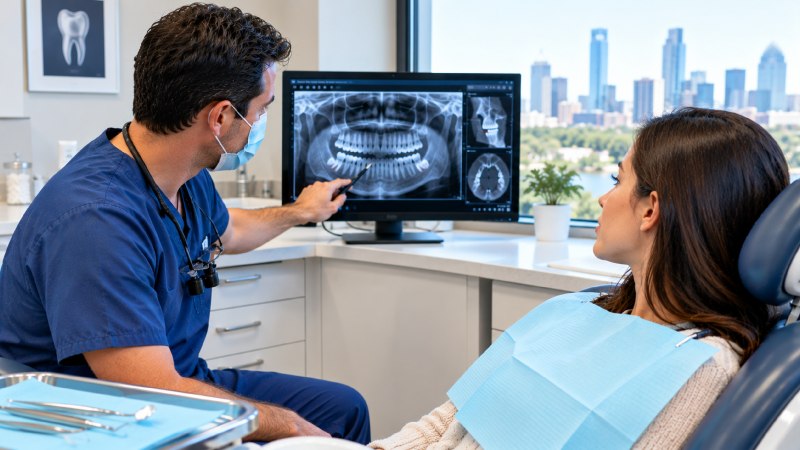
Jawbone size plays a major role in whether these teeth cause problems. Many patients simply don’t have enough room for a third set of molars to erupt properly, which leads to impaction, crowding, or teeth that emerge at odd angles. Dentists in fast-growing metro areas like Austin see this pattern often enough that referrals to oral surgeons have become a routine part of general checkups. A tooth that looks fine on a visual exam can still be pressing against a nerve or neighboring root beneath the gumline, which is why imaging matters as much as the physical exam.
What Patients Actually Experience Once Extraction Becomes Necessary
Pain is rarely the only signal that it’s time to act. Swelling near the jaw hinge, recurring sinus pressure, or a persistent bad taste can all point to an infected or partially erupted molar. Patients who wait too long sometimes develop cysts around the impacted tooth, which complicates recovery and extends healing time considerably. Oral surgeons generally prefer to intervene before these secondary issues develop, since early removal tends to produce a cleaner surgical site and a faster return to normal eating.
Local experience bears this out. Clinics offering Central Austin wisdom teeth extraction have noted that patients who schedule removal at the first sign of impaction, rather than waiting for acute pain, tend to report shorter downtime and fewer complications during follow-up visits. That pattern holds across age groups, though younger patients in their late teens and early twenties generally heal faster due to more pliable bone structure. The decision to wait or proceed isn’t purely about discomfort; it also depends on how the roots are positioned relative to the nerve canal, something only a trained surgeon can assess with proper imaging.
National guidance mirrors what local providers see daily. According to Mayo Clinic oral surgery information, impacted wisdom teeth can lead to infection, damage to neighboring teeth, and cyst formation if left untreated, which is why dentists frequently recommend evaluation even in the absence of pain. That overlap between national clinical consensus and local case patterns gives patients a clearer picture of why timing conversations happen earlier than many expect.
Planning Recovery Around a Central Austin Schedule
Recovery logistics matter as much as the surgery itself, particularly for people balancing jobs or coursework. Most patients need three to five days of reduced activity, with swelling peaking around the second day before gradually subsiding. Scheduling extraction before a weekend or a lighter stretch of the semester tends to ease the adjustment, since chewing and speaking comfortably can take closer to a week for some patients.
Diet adjustments afterward are fairly predictable but easy to underestimate. Soft foods, lukewarm liquids, and avoiding straws for the first several days all reduce the risk of dry socket, a painful complication tied to premature clot dislodgment. Patients who plan their grocery runs and meal prep in advance generally report smoother first few days than those who try to improvise mid-recovery.
Follow-up care rounds out the process and shouldn’t be treated as optional. A short check-in appointment lets the surgeon confirm the socket is healing properly and catch any early signs of infection before they escalate. For most patients, that single follow-up, combined with clear home-care instructions, is enough to close out the recovery period without further intervention.